Description
Once absorbed by the body, D-Panthenol converts into pantothenic acid—a vital component of Coenzyme A—which fuels cell metabolism, accelerates deep skin tissue repair and locks in long-term structural moisture.
Key Cosmetic Benefits
-
- Intense, Multi-Layer Hydration: Functions as a deep-penetrating humectant that binds water molecule networks into the stratum corneum, dramatically lowering Transepidermal Water Loss (TEWL) and leaving skin supple.
- Accelerated Skin Repair & Soothing: Directly stimulates fibroblast proliferation, speeds up epidermal healing, and soothes localized irritation, making it indispensable for after-sun care, anti-acne recovery, and eczema relief.
- Structural Hair Fortification: Penetrates the hair cortex to bind moisture internally. It thickens individual hair strands, improves mechanical tensile strength against brushing, and imparts a brilliant, non-greasy luster.
- Advanced Nail Care: Greatly improves the hydration and flexibility of keratinized nail structures, effectively reducing brittleness and splitting.
Technical Specifications
-
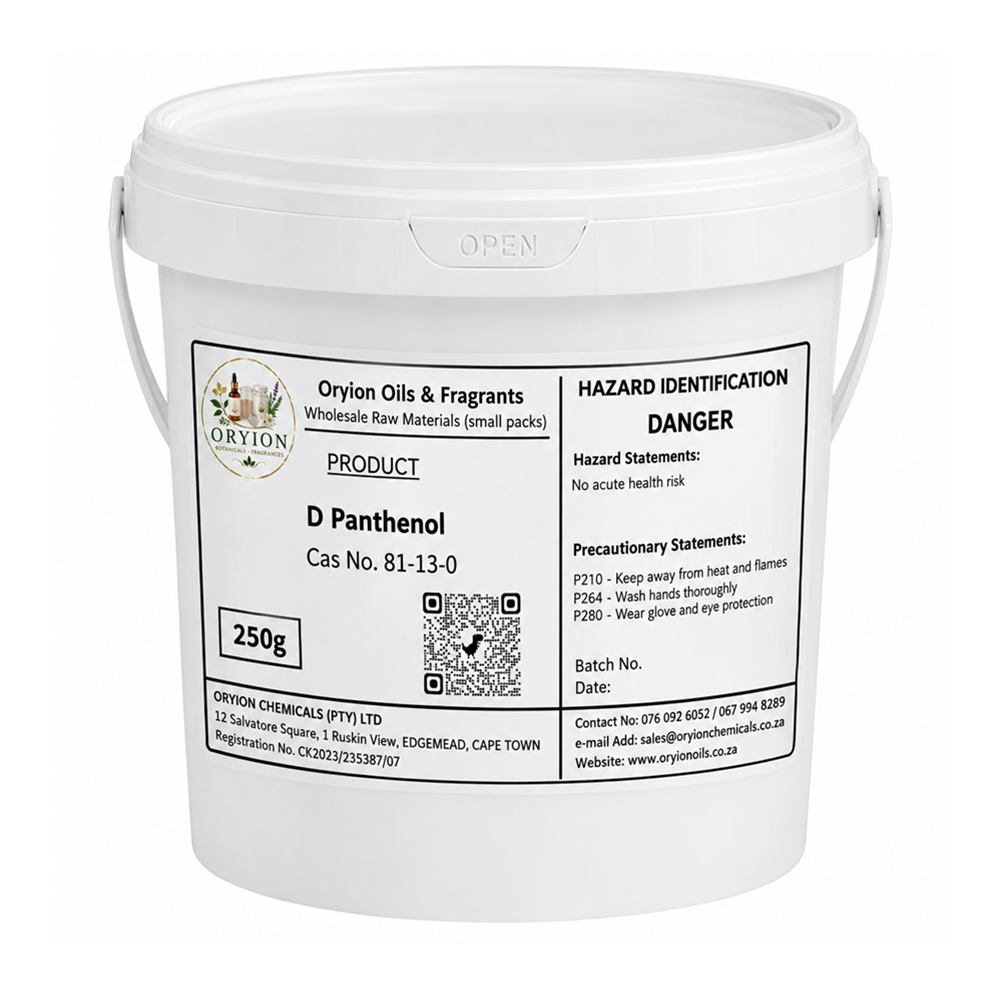
- INCI Name: Panthenol
- Chemical Name: Dextro-Panthenol / Dexpanthenol
- CAS Number: 81-13-0
- Appearance: Clear, colourless, exceptionally viscous, hygroscopic liquid (crystallizes or hardens upon prolonged cold storage).
- Assay (Purity): Minimum 98.0% – 102.0% active D-Panthenol
- Solubility: Easily soluble in water, alcohol, and propylene glycol; completely insoluble in fats, oils, and lipophilic solvents.
Formulation & Usage Guidelines
- Recommended Usage Level: Generally utilized between 0.5% to 5.0% based on formulation type.
-
- Daily Haircare (Shampoos, Conditioners, Serums): 0.5% – 1.0%
- Everyday Skincare (Toners, Lotions, Face Creams): 1.0% – 3.0%
- Intensive Skin Recovery (Ointments, After-Sun, Tattoo Balms): 3.0% – 5.0%
-
- Handling & Processing Note: Pure D-Panthenol is exceptionally thick and sticky at room temperature. For easy handling, gently warm the container in a warm water bath (40°C–50°C) to reduce viscosity before pouring or weighing.
- Processing Temperature: Can withstand hot process emulsions, but ideally introduced during the cooling phase (below 40°C) to guarantee maximum stability.
- Optimal pH Stability Range: Maintains stability within a formulation pH environment of 4.0 to 7.0. Hydrolysis may occur in highly acidic or highly alkaline solutions.
Reviews
There are no reviews yet.